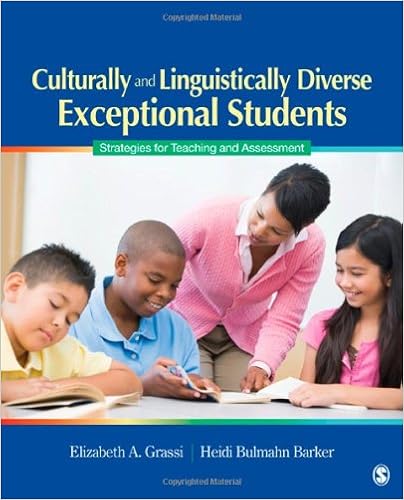
As a graduate student at Bridgewater State University, I am currently enrolled in multiple classes. One class that I find really fascinating, because I did not have much experience with it prior to enrolling, is Differentiating Second Language Learners from Exceptionalities. Within the course we look at the struggles of identifying and teaching English Language Learners, students with exceptionalities, and students who are both. The book we are reading for the course, Culturally and Linguistically Diverse Exceptional Student is eye-opening and provides wonderful strategies to apply in my classroom.
One of my favorite topics is from Chapter 9: Teaching Strategies. The chapter addressed different foundational strategies teachers can apply that can help reach culturally and linguistically diverse exceptional (CLDE) students more effectively. The strategies focus on making content accessible while also supporting the language acquisition process. One of the most important aspects to remember when teaching CLDE students is that expectations should remain high for all students and curriculum should not be made easier or watered down in an effort to help these students comprehend material. By lowering our expectations of students or by watering down material, we are taking away the students’ access to the material their peers are receiving and they need to receive as part of their general education.
The chapter highlights five different strategies in detail, including the 3-way model, front-loading and emphasizing vocabulary and content, explicitly teaching any cultural schemata, using student’s first language to clarify, and organizing academic information. The strategy I found most useful to my classroom presently was the 3-way model. Grassi and Baker's model allows for the content to be comprehensible for all students and includes the following three steps:
Step 1. The content and directions for all activities are spoken.
Step 2. Key points from the content and directions for all activities are written down.
Step 3. Key points from the context and directions for all activities are presented with visual context.
Now this may seem like common sense. You should be speaking, writing, and providing visuals while teaching to reach all learners. However, it is something I often overlook and do not do every time I present directions or content. The key is to try and do these things simultaneously so that students can see the visual while they hear what is being said and read the written language. The 3-way model not only benefits those CLDE students, but also every student in the classroom.

Strong instructional ideas...I really like that.
ReplyDelete