Sunday, February 26, 2017

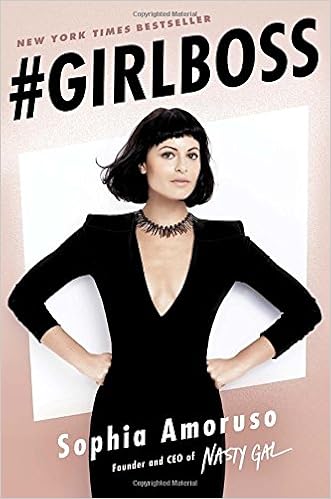
#GIRLBOSS - Sophia Amoruso


If you are in need of some woman empowerment or a giant dose of motivation, this is the book for you! This autobiography follows the rise of Sophia Amoruso's clothing business Nasty Gal. From a small vintage e-bay shop to a multi-million dollar clothing company, Amoruso's story is as inspiring as it is entertaining. Amoruso brings humor and insight into her own upbringing as an awkward teenager who never quite fit in, to a young adult hitchhiking, living freegan, and hating corporate America. She details all of the various odd jobs she held just to pay bills until she set up her own e-bay shop to resell clothing she thrifted herself. From there her business kept growing in success to where she is now, the CEO and creative director of one of the fastest growing and most successful online retailers.

Throughout the telling of her narrative, Amaruso highlights all of the qualities that led to her astounding success, including staying true to herself, choosing quality over quantity, and always listening to what the customer wants. Her immaculate attention to detail is what put her business over the edge and eventually led to her gigantic following of loyal customers. This book will not tell you any get rich quick secrets, but instead emphasizes that hard work and an immense amount of effort and perseverance will take you wherever you want to go!

The autobiography chronicles not only how Amaruso ended up where she is, but it is full of wise words and advice to live by if you are on your way or already are a #GIRLBOSS.

Sunday, February 19, 2017

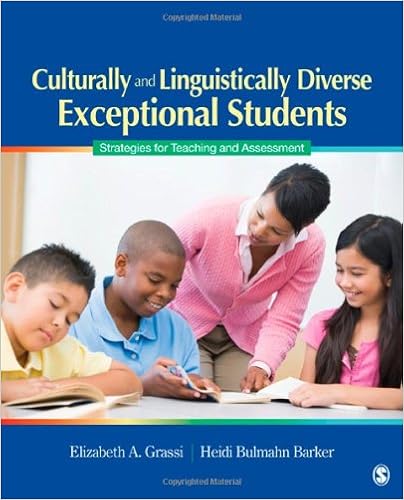
Culturally and Linguistically Diverse Exceptional Students - Elizabeth A. Grassi & Heidi B. Barker


As a graduate student at Bridgewater State University, I am currently enrolled in multiple classes. One class that I find really fascinating, because I did not have much experience with it prior to enrolling, is Differentiating Second Language Learners from Exceptionalities. Within the course we look at the struggles of identifying and teaching English Language Learners, students with exceptionalities, and students who are both. The book we are reading for the course, Culturally and Linguistically Diverse Exceptional Student is eye-opening and provides wonderful strategies to apply in my classroom.

One of my favorite topics is from Chapter 9: Teaching Strategies. The chapter addressed different foundational strategies teachers can apply that can help reach culturally and linguistically diverse exceptional (CLDE) students more effectively. The strategies focus on making content accessible while also supporting the language acquisition process. One of the most important aspects to remember when teaching CLDE students is that expectations should remain high for all students and curriculum should not be made easier or watered down in an effort to help these students comprehend material. By lowering our expectations of students or by watering down material, we are taking away the students’ access to the material their peers are receiving and they need to receive as part of their general education.

The chapter highlights five different strategies in detail, including the 3-way model, front-loading and emphasizing vocabulary and content, explicitly teaching any cultural schemata, using student’s first language to clarify, and organizing academic information. The strategy I found most useful to my classroom presently was the 3-way model. Grassi and Baker's model allows for the content to be comprehensible for all students and includes the following three steps:

Step 1. The content and directions for all activities are spoken.
Step 2. Key points from the content and directions for all activities are written down.
Step 3. Key points from the context and directions for all activities are presented with visual context.

Now this may seem like common sense. You should be speaking, writing, and providing visuals while teaching to reach all learners. However, it is something I often overlook and do not do every time I present directions or content. The key is to try and do these things simultaneously so that students can see the visual while they hear what is being said and read the written language. The 3-way model not only benefits those CLDE students, but also every student in the classroom.

Sunday, February 12, 2017

Ready Player One - Ernest Cline


This past week I have done something I rarely ever do, I read a book I had already read. The reason behind my rarely doing this is because I believe there are so many books out there. If I keep rereading books I’ve already read, I may miss out on the opportunity to read a new and wonderful book. With that being said, the book I am about to mention is definitely worth the risk and is a story I will most likely reread again in the future.

The book I am describing is Ready Player One by Ernest Cline. I stumbled upon this book a few years ago when I tutored at my town library. I would walk the stacks of book either before or in between my tutoring sessions. This book jumped right off the shelf due to its vibrant cover. After reading the book jacket I was intrigued and checked it out. I finished reading the book in one day; it was that good that I literally picked it up and did not put it down until I finished.

The story is from my favorite genre, science fiction, and follows teenager Wade Watts through a dystopian-like future. It’s the year 2044 and everyone escapes reality into a virtual utopia called OASIS. The catch: the world’s richest man has stated in his will his fortune will go to whomever can find an “Easter Egg” hidden within the game. Wade Watts sets out on that mission with plenty of suspense and obstacles along the way. The most endearing part of this novel is it is riddled with 1980’s pop culture references, because the “Easter Egg” is hidden among 1980s trivia. The story is funny, puzzling, and keeps the reader in a virtual suspense.

Rereading the novel for a second time allowed me to really hone in on the references and details I missed in my first speed reading. This book sits on my shelf with my other sci-fi favorites including Ray Bradbury’sFahrenheit 451 and H.G. Wells’The War of the Worlds.

Sunday, February 5, 2017

Wonder - R. J. Palacio


These past couple of weeks have been extremely hectic and busy. Between work, graduate school, and my personal life, I have found very little time and motivation to read. I am human, as we all are, and hopefully this February Vacation will provide some much needed time alone with a good book.

While I am challenging myself to read for pleasure outside of school, I am also reading in school with my students. This past month, I have been reading Wonder by R. J. Palacio. This is by far one of the best books I have ever read, and my students enjoy it so much so they beg me to keep reading when it is time to stop.

The story begins from August Pullman's point of view, a fifth grade boy who is attending school for the first time. However, August has many facial deformities due to a number of surgeries from a genetic disease he suffers from. The first part of the book follows the ups and downs of August's first weeks at school and ends on a tragic cliff hanger on Halloween. The story then picks up and continues through time from several characters' points of views, including August's sister Via, August's friend Summer, and August's other friend Jack Will.

The story is captivating to not only my 5th grade students, but to any reader. It covers the ins and outs of childhood issues, from bullying, to popularity, to insecurity, and most importantly friendship. Palacio has an unparalleled ability to draw the reader in from the beginning lines to the last chapter. The lessons and themes of the novel resonate with me as an adult and hit home for my students. They become ecstatic, enraged, and impassioned at every turn of the page. They love this story, and its popularity is a testament to how wide reaching its messages are.